Yokosuka MXY-7 Ohka - Japanese Kamikaze Aircraft
- Description
- Reviews
- Files
It is common knowledge to anyone with a rudimentary understanding of the Pacific Theater that by 1944 the war was very much not in Japan’s favor. The Imperial Japanese Army was mounting desperate last stands on every island atoll they could maintain a foothold on and was struggling to equip and feed its own troops whilst the Americans had literal ice cream barges rolling up to the beaches to supply the GIs with fresh food and desserts. At sea, the Imperial Japanese Navy had lost the majority of its capital ships as battleships fell into obsolescence and aircraft carriers were hampered in their operations as most of the IJN’s capable pilots were dead. These are the conditions which bred the concept of kamikazes. Their name meaning ‘divine wind,’ kamikazes were suicide bombers, nigh-untrained pilots given outdated aircraft, a few hundred kilos of explosive, and a mission to ram the most important American ship they could find. The problem with these was that the older aircraft most kamikazes used were slow and overladen, hence making them easy targets for the Oerlikon 20 mm and Bofors 40 mm guns of the US Navy. The solution to this was an aircraft specialized for kamikaze duty which could transport a large explosive payload at very high speed; this would be materialized as the Ohka.
The Yokosuka MXY-7, better known as the Ohka or ‘cherry blossom,’ was first conceptualized in 1943 by Ensign Mitsuo Ohta of 405th Kokutai as a response to his observations that IJNAS air attacks had gone down in effectiveness so much that suicide weapons may be of greater effect. However, naval authorities did not take interest in the design until the following year as it was submitted in August 1944. The project was accepted eleven days later and formal, Navy-headed development started in secrecy; this was in part to hide its existence from the public, as the fact that the Navy was specifically developing suicide weapons would paint an… unfavorable picture of the state of the Navy. Flight testing commenced in October, the same month kamikaze attacks commenced en masse on the frontlines.
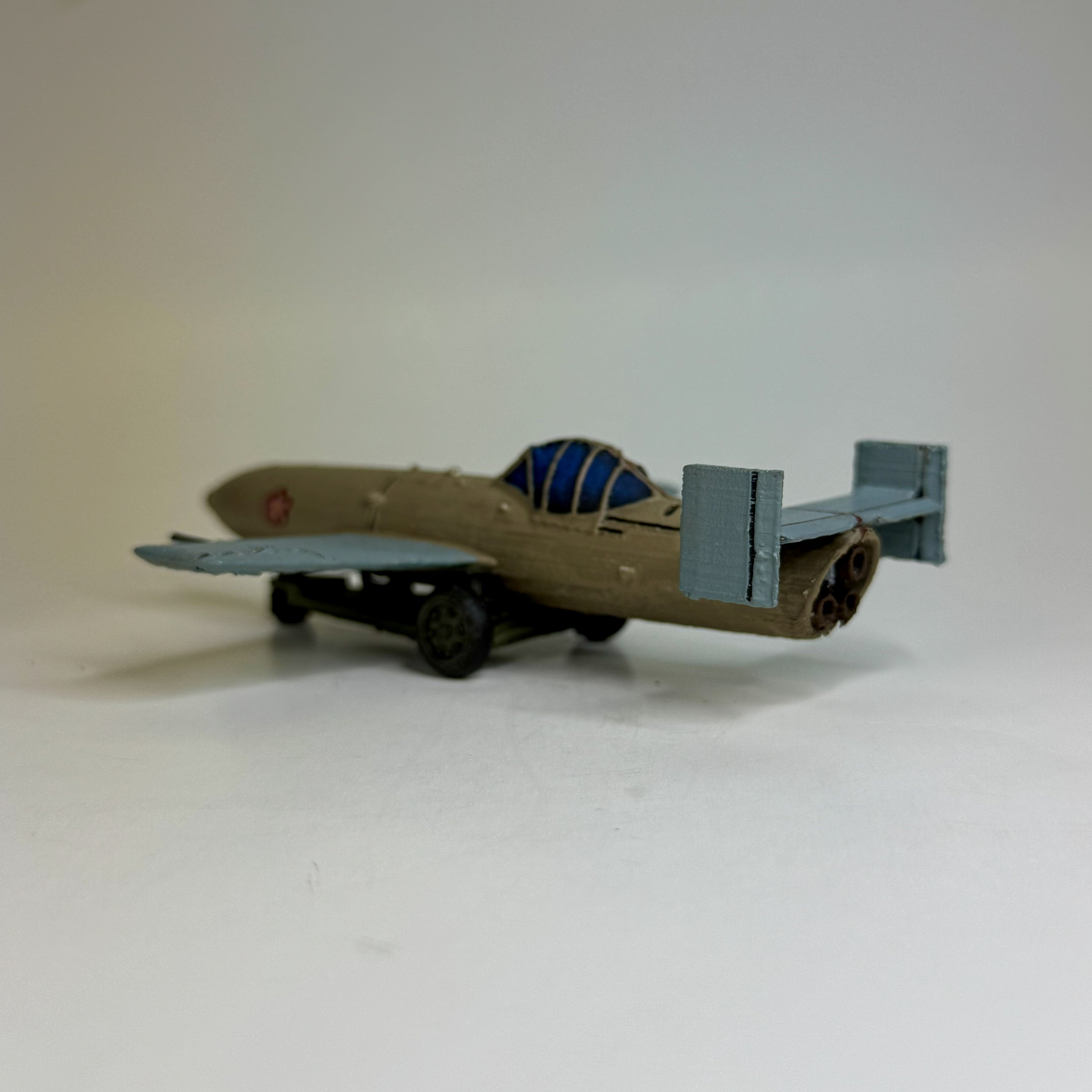
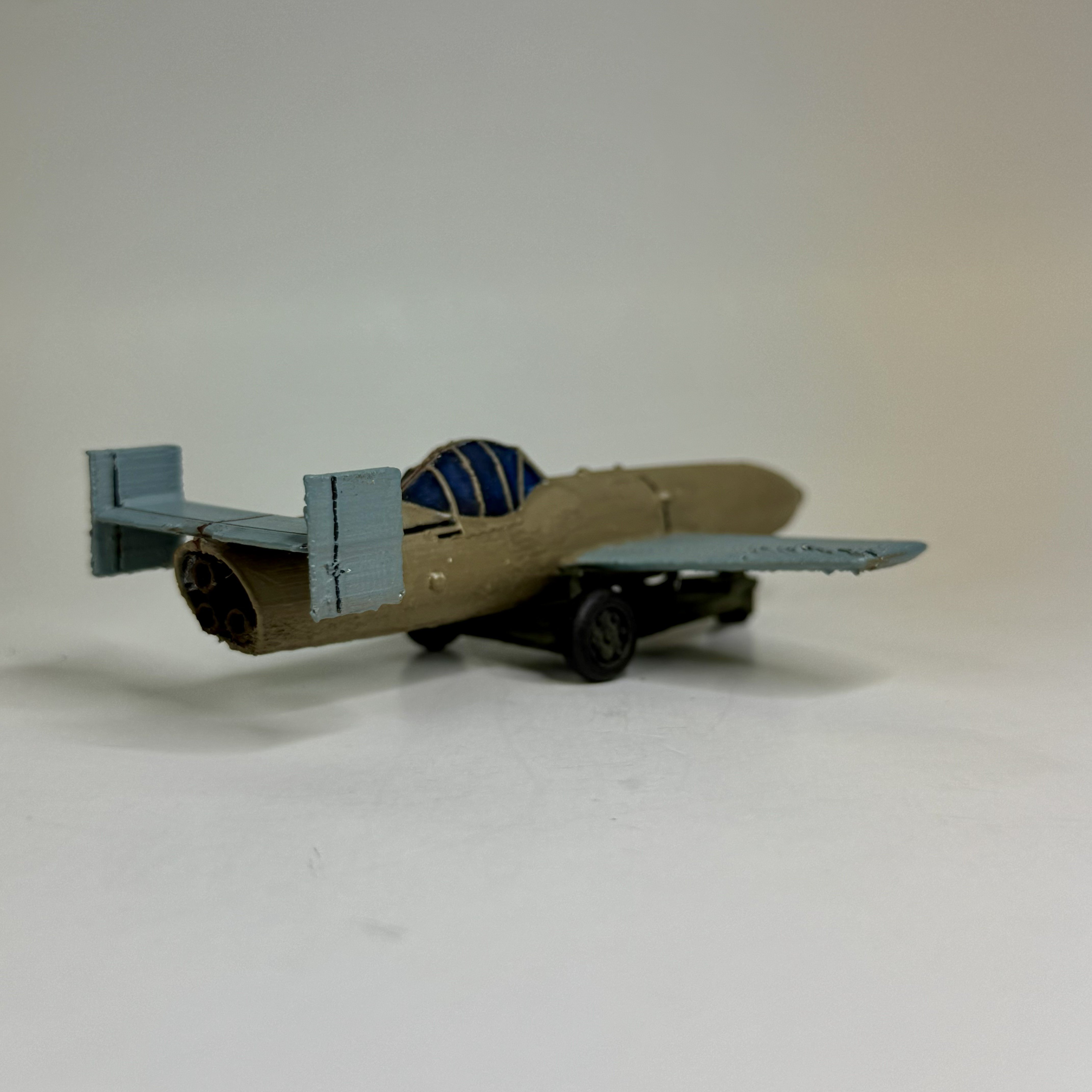
The aircraft’s design was very, very simple. It was essentially a 1,200 kilogram ammonal warhead encased in a thin aluminum fuselage, provided thrust by three solid fuel rocket motors and provided lift by wooden wings. The cockpit was as rudimentary as possible - why waste complicated instruments on a literal missile, after all - having only an altimeter, speedometer, attitude indicator, and controls for the ailerons and motors (those amounting to a flight stick and I’d presume a switch for each motor, as they could be ignited simultaneously or one at a time). There was no landing gear; the aircraft would be carried under the fuselage of a Mitsubishi G4M and dropped like a bomb once within visual range of the target. The version which saw combat was known as the Type 11; there were other in-development versions such as a thermojet-powered Type 22 and a turbojet-powered Type 33, but these did not see combat.
Ohkas were deployed for the first time on 21 March 1945; a fleet of eighteen Ohka-laden G4M bombers and thirty escort fighters set out to strike various US Navy vessels off Okinawa. The entire squadron was intercepted by US combat air patrol fighters, resulting in all eighteen of the bombers being shot down before they could release their payloads, along with all but four of the escort fighters being lost. Unfortunately for the IJNAS, this was not a fluke. The Ohka itself was not a bad design (apart from being a suicide weapon of course), but it was severely limited by the bombers which carried it; the G4M was slow and cumbersome, an easy target for US Navy Hellcats and Corsairs. Of the three-hundred Ohkas which were available for the Battle of Okinawa, seventy-four were deployed. Most of these were destroyed with their motherships before they could be dropped. While (when used effectively) Ohkas did pose a significant threat, only six US Navy vessels were sunk or critically damaged by Ohka attacks, all of them destroyers; the closest an Ohka got to hitting a capital ship was a near-miss which overshot the USS West Virginia. They were not deployed to any other areas; attempts were made to ship them to Leyte Gulf, but the carriers Shinano and Unryu which were transporting them were sunk by USN submarines.
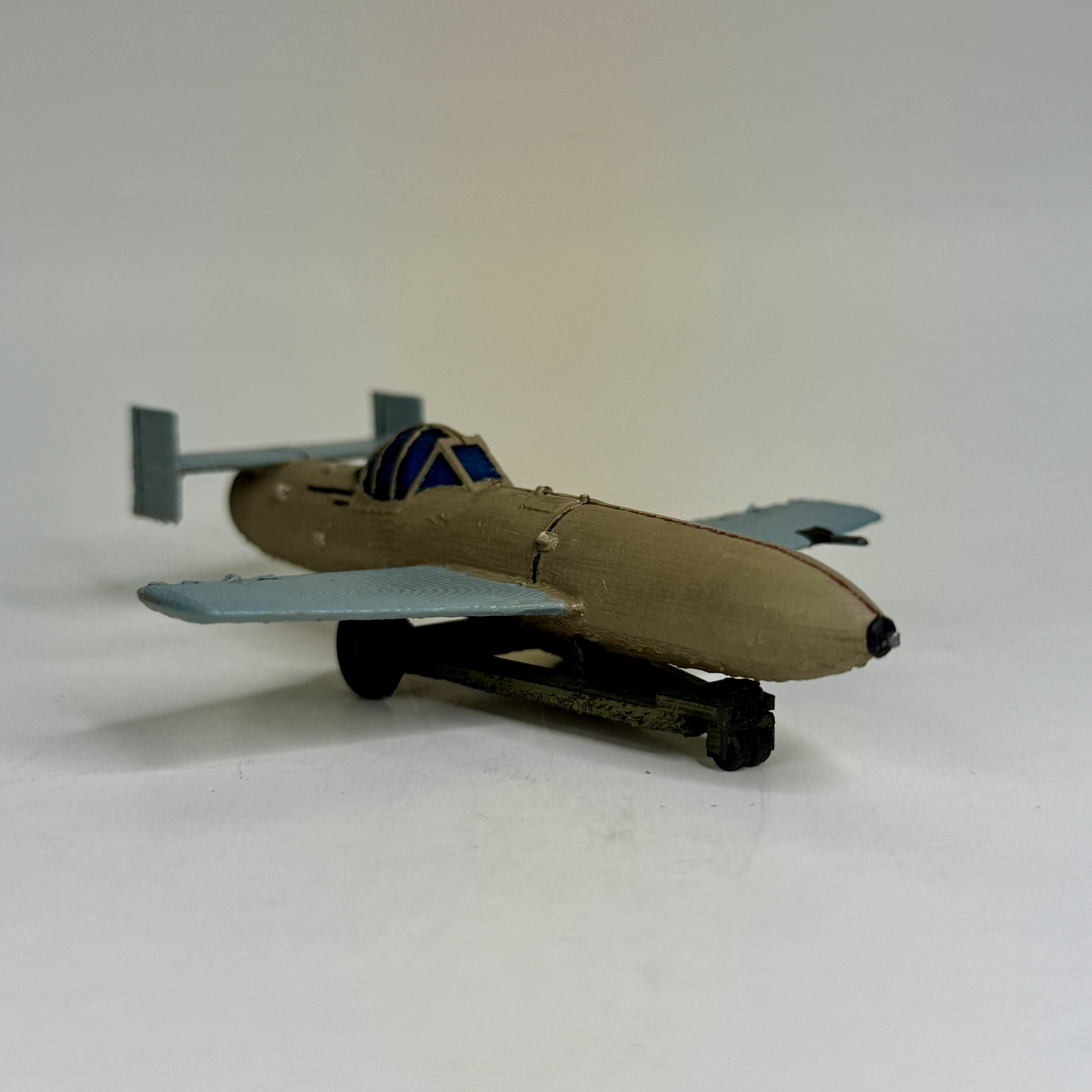
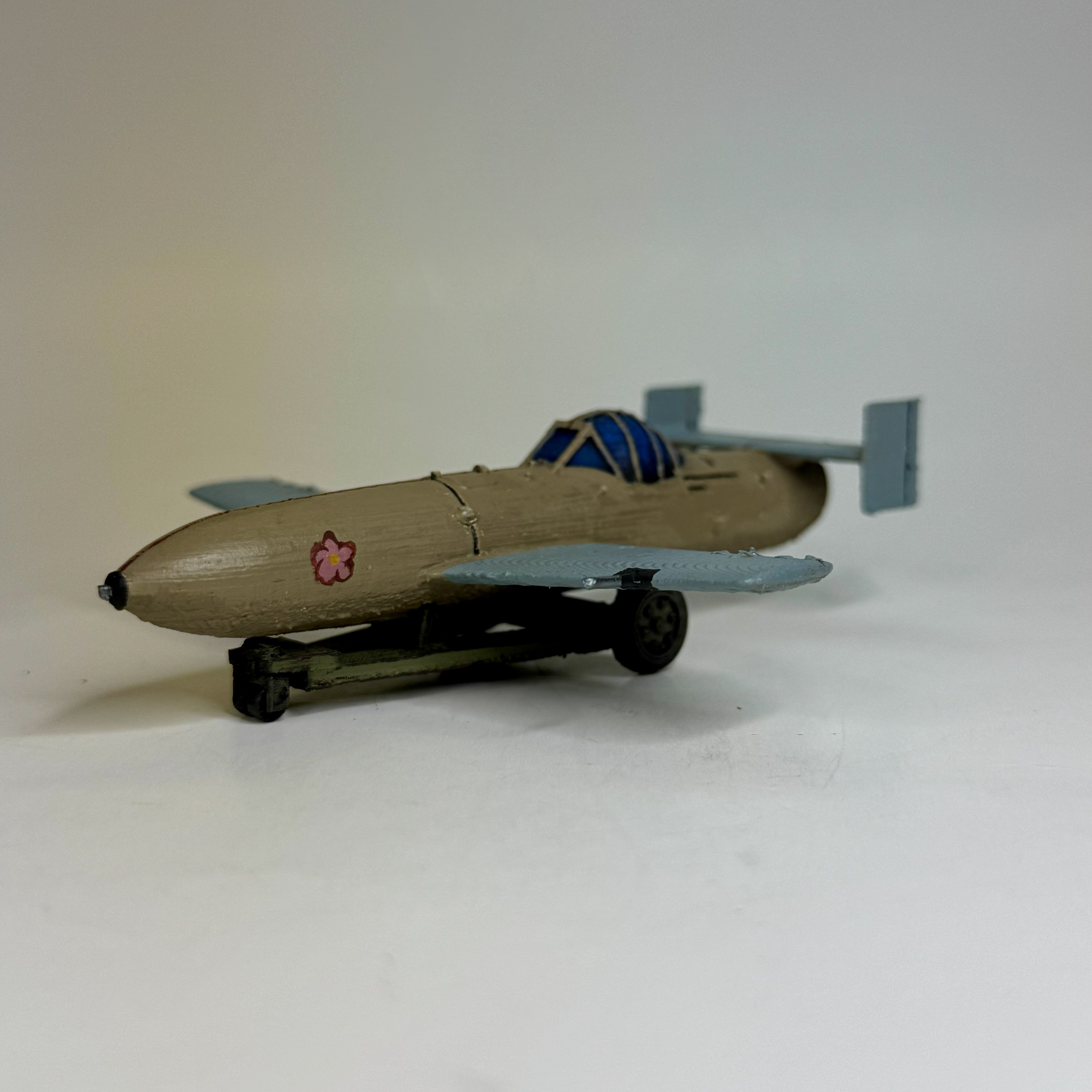
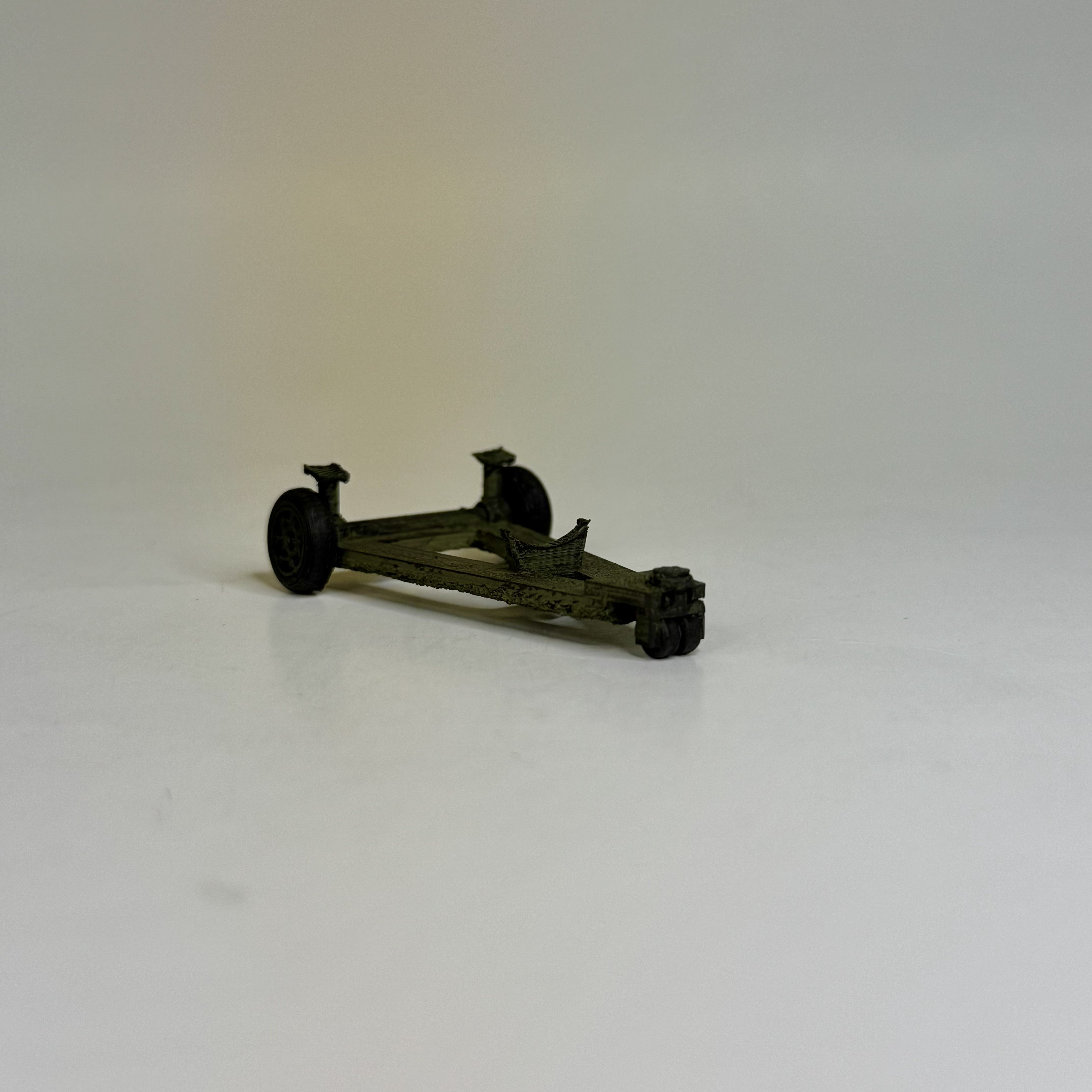
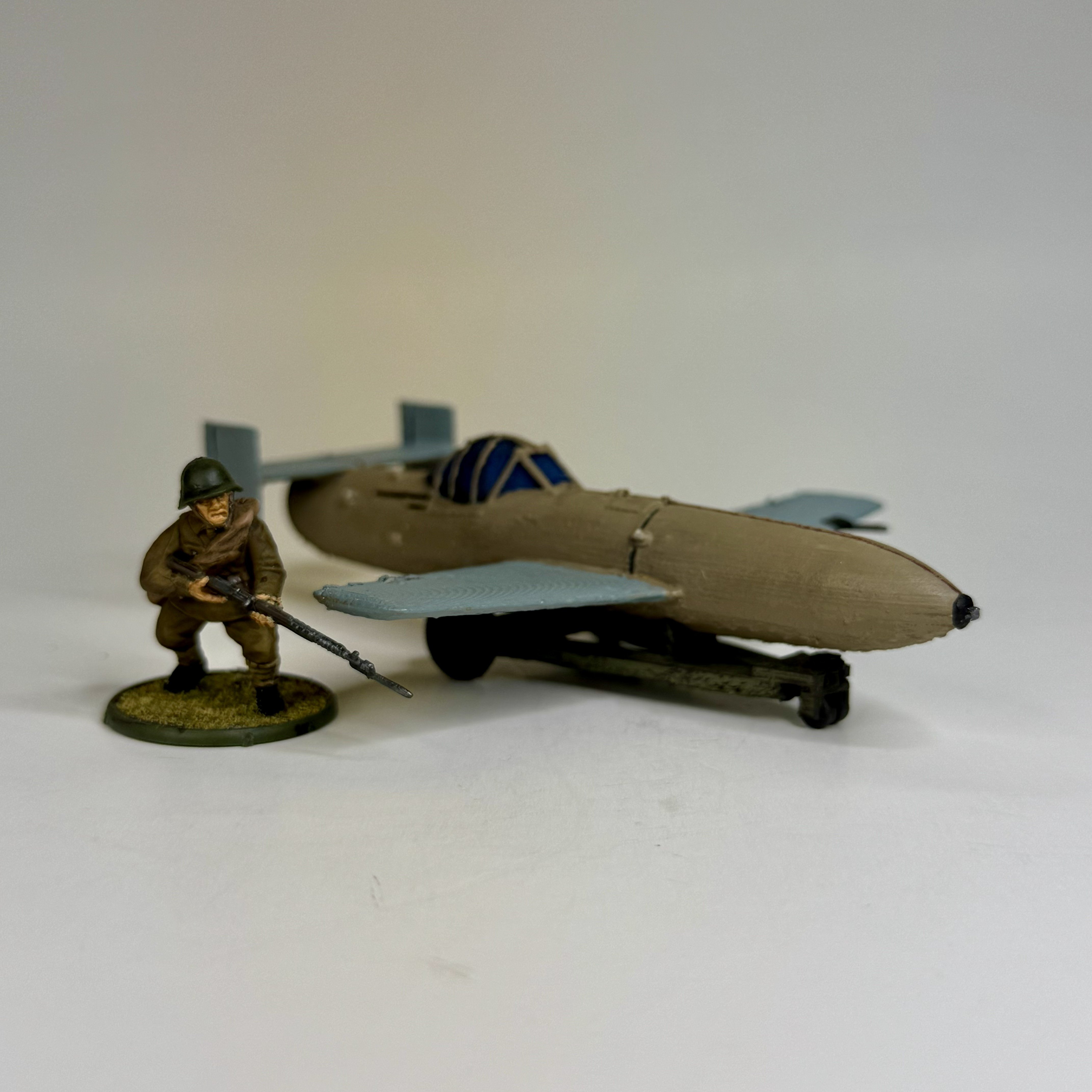
This file is simple enough. Includes a Type 11 Ohka and a carrying cart; the aircraft is one piece and the cart is four, two back wheels (one file, print two), a smaller front wheel assembly, and the chassis. Print all at 0.1mm layers in FDM. Use supports for all.
The Yokosuka MXY-7, better known as the Ohka or ‘cherry blossom,’ was first conceptualized in 1943 by Ensign Mitsuo Ohta of 405th Kokutai as a response to his observations that IJNAS air attacks had gone down in effectiveness so much that suicide weapons may be of greater effect. However, naval authorities did not take interest in the design until the following year as it was submitted in August 1944. The project was accepted eleven days later and formal, Navy-headed development started in secrecy; this was in part to hide its existence from the public, as the fact that the Navy was specifically developing suicide weapons would paint an… unfavorable picture of the state of the Navy. Flight testing commenced in October, the same month kamikaze attacks commenced en masse on the frontlines.
The aircraft’s design was very, very simple. It was essentially a 1,200 kilogram ammonal warhead encased in a thin aluminum fuselage, provided thrust by three solid fuel rocket motors and provided lift by wooden wings. The cockpit was as rudimentary as possible - why waste complicated instruments on a literal missile, after all - having only an altimeter, speedometer, attitude indicator, and controls for the ailerons and motors (those amounting to a flight stick and I’d presume a switch for each motor, as they could be ignited simultaneously or one at a time). There was no landing gear; the aircraft would be carried under the fuselage of a Mitsubishi G4M and dropped like a bomb once within visual range of the target. The version which saw combat was known as the Type 11; there were other in-development versions such as a thermojet-powered Type 22 and a turbojet-powered Type 33, but these did not see combat.
Ohkas were deployed for the first time on 21 March 1945; a fleet of eighteen Ohka-laden G4M bombers and thirty escort fighters set out to strike various US Navy vessels off Okinawa. The entire squadron was intercepted by US combat air patrol fighters, resulting in all eighteen of the bombers being shot down before they could release their payloads, along with all but four of the escort fighters being lost. Unfortunately for the IJNAS, this was not a fluke. The Ohka itself was not a bad design (apart from being a suicide weapon of course), but it was severely limited by the bombers which carried it; the G4M was slow and cumbersome, an easy target for US Navy Hellcats and Corsairs. Of the three-hundred Ohkas which were available for the Battle of Okinawa, seventy-four were deployed. Most of these were destroyed with their motherships before they could be dropped. While (when used effectively) Ohkas did pose a significant threat, only six US Navy vessels were sunk or critically damaged by Ohka attacks, all of them destroyers; the closest an Ohka got to hitting a capital ship was a near-miss which overshot the USS West Virginia. They were not deployed to any other areas; attempts were made to ship them to Leyte Gulf, but the carriers Shinano and Unryu which were transporting them were sunk by USN submarines.
This file is simple enough. Includes a Type 11 Ohka and a carrying cart; the aircraft is one piece and the cart is four, two back wheels (one file, print two), a smaller front wheel assembly, and the chassis. Print all at 0.1mm layers in FDM. Use supports for all.
No one's reviewed this product yet. Let people know if you enjoyed this model!
| Filename | Size | Last updated |
|---|---|---|
| Yokosuka MXY-7 Ohka Type 11.zip | 1.3 MiB | 2026-06-24 |