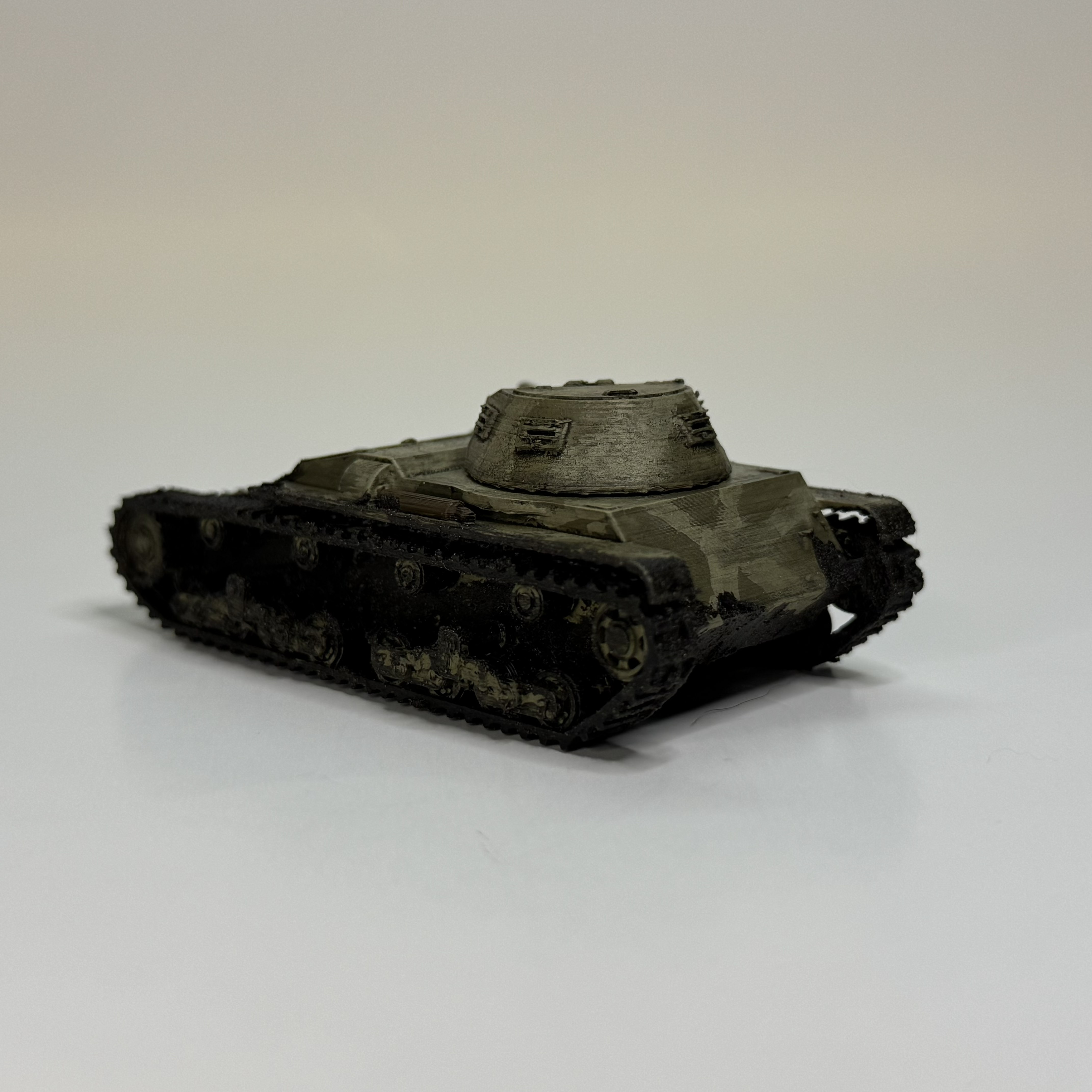
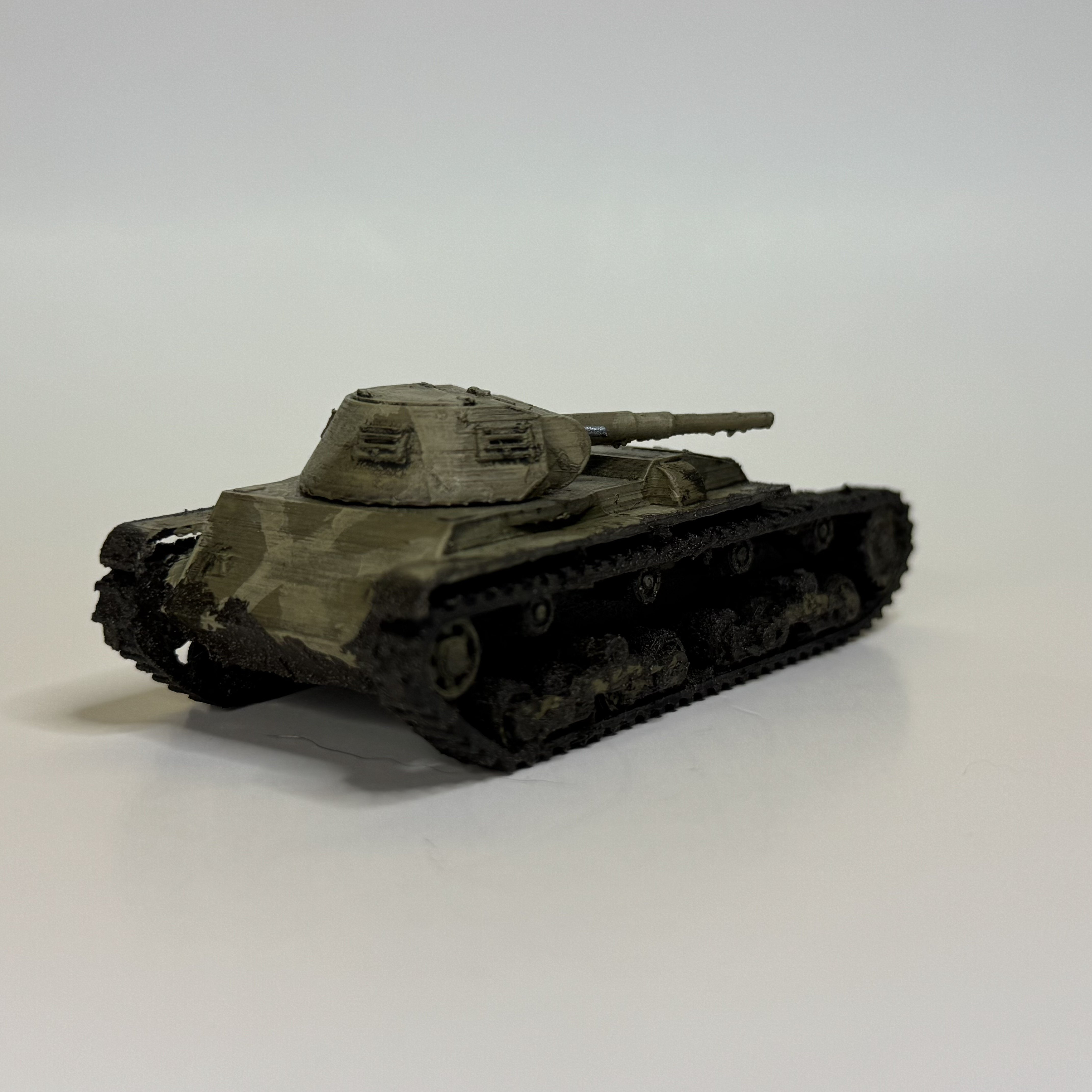
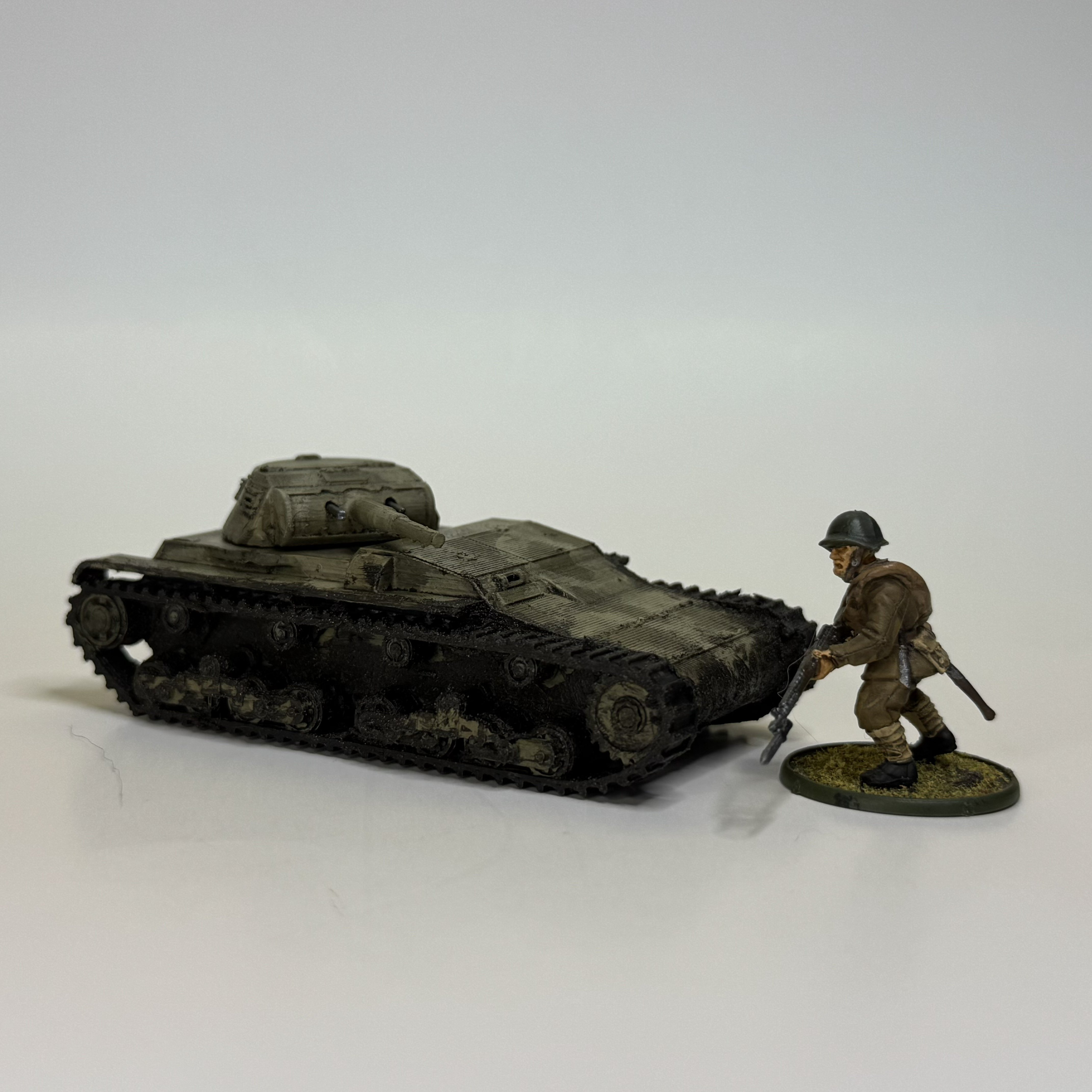
Verdeja 1 - Spanish Light Tank
- Description
- Reviews
- Files
The Spanish were, quite frankly, wrecked after the Spanish Civil War in almost every way possible. One wouldn’t, hence, expect the Spanish to be very industrially capable after the war, and they really weren’t. Despite this, the Spanish developed a quite capable and modern light tank as the war was closing, under the direction of artillery officer Felix Verdeja.
Felix Verdeja Bardules was commander of the Nationalists’ 1st Tank Battalion's maintenance company, and hence became one of the most knowledgeable men on tanks in Spain. Having firsthand experience with and knowledge of all of the tanks available to the Nationalists - those being primarily Renault FTs, Panzer Is, T-26s, and BT-5s - Verdeja set out to design his own tank, combining the strengths of all their existing designs while eliminating as many faults as possible.
This project was presented to the commander of the 1st Tank Battalion and met with mild interest; Verdeja was given permission to proceed with a prototype under the condition that repair of operational tanks would not be inhibited, but was not provided financial aid. The commander of Condor Legion tanks, on the other hand, was staunchly opposed to the project, citing that Verdeja’s lack of deep technical knowledge and Spain’s lack of industry would result in failure. Verdeja, however, began production of a prototype in Zaragoza. This prototype was produced at lightning speed, being complete in two months and built from scrap and pieces of other tanks. This prototype led to the first production vehicle being produced over the course of the next year, completed and tested May 20th in front of a commission of officers, competing with a T-26B. It was found quite satisfactory.
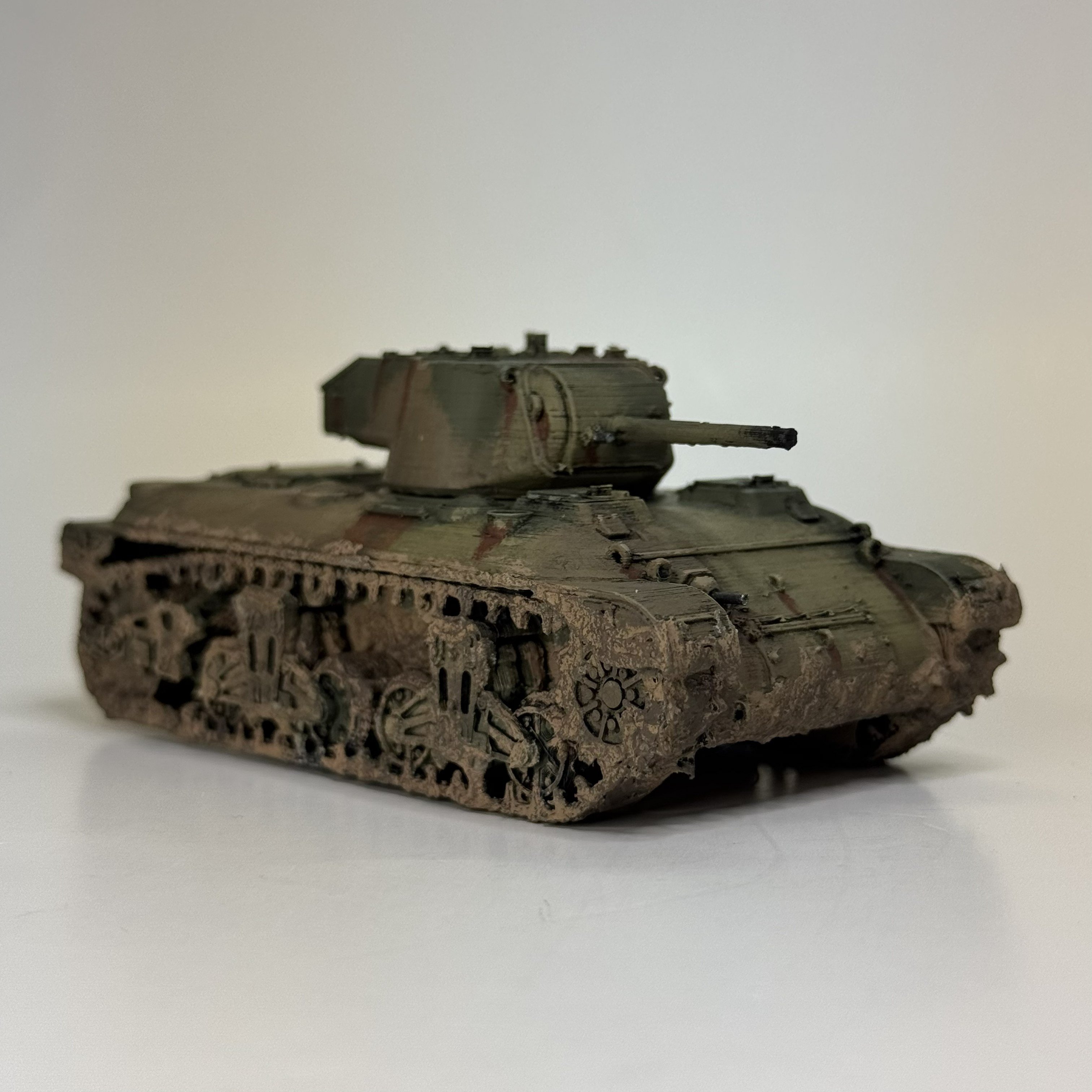
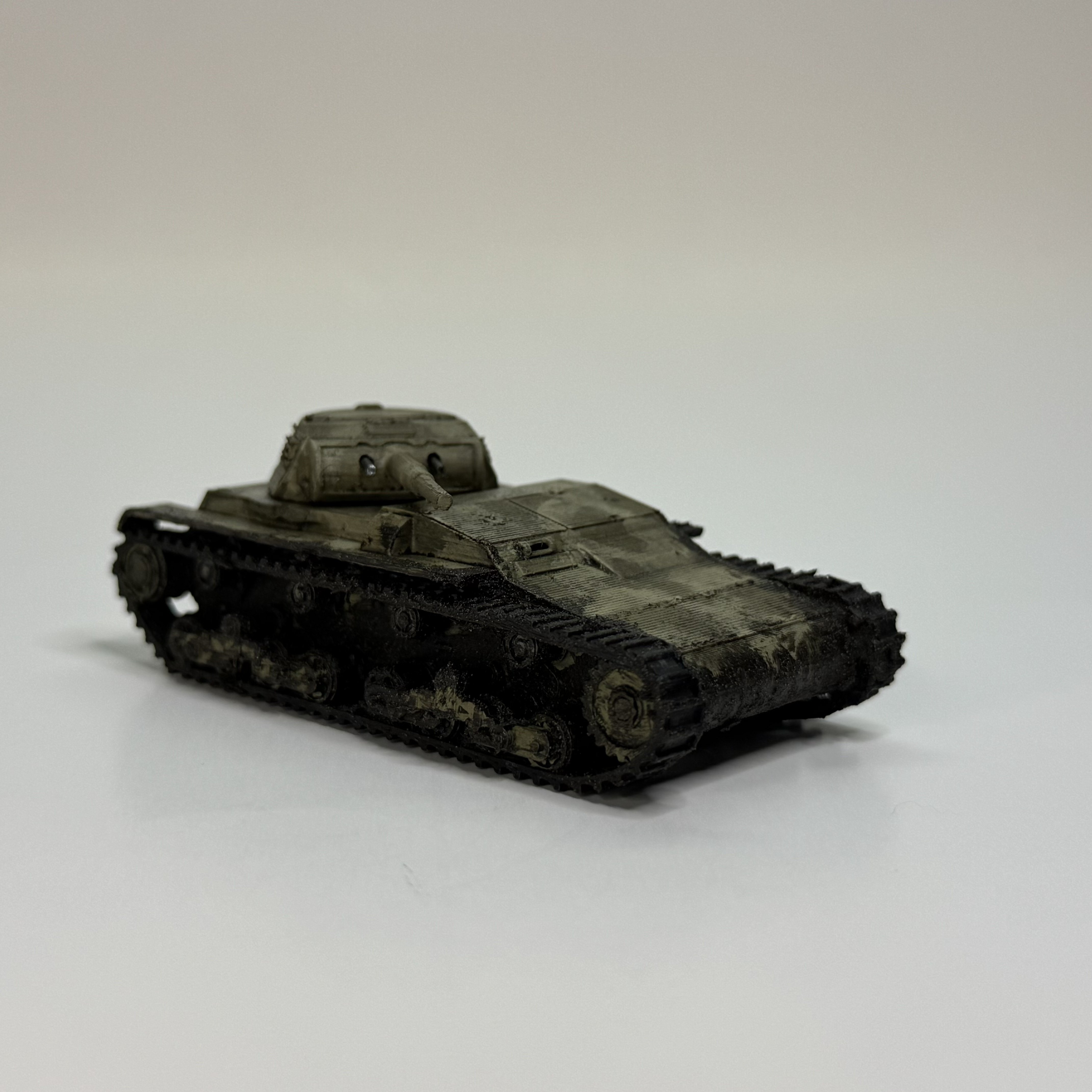
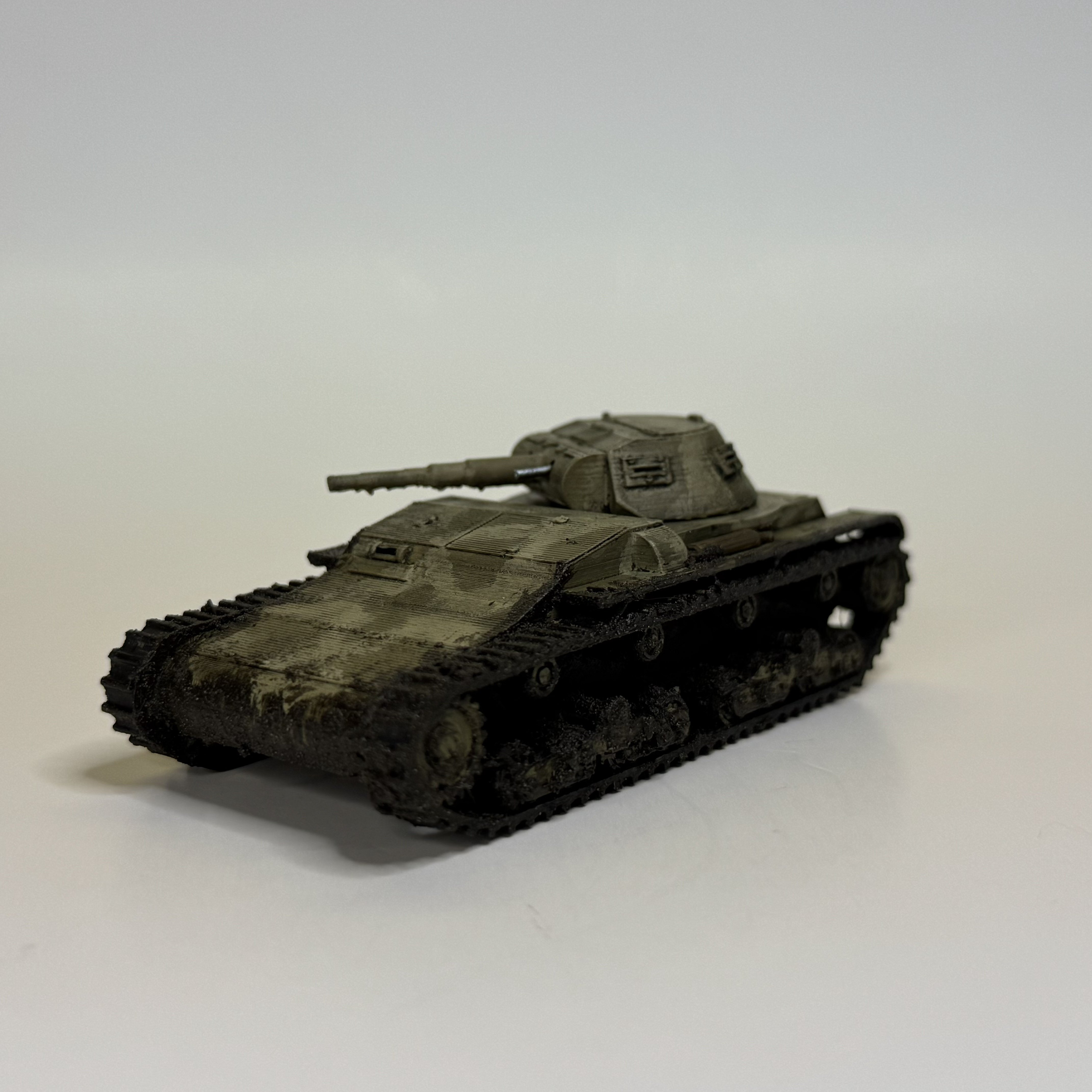
The Verdeja 1 was, most noticeably, very low-profile, being a bit under 1.6 meters (~5 feet) tall. It was armed with a Spanish-made 45 mm and twin 7.92 mm machine guns, capable of elevating up to 72 degrees to be used in an anti-aircraft role. Despite its intended role in anti-aircraft, this could have also been very useful in urban warfare. The tank was armored relatively lightly; the front had 10 mm of armor at 12 degrees with a small glacis 25 mm thick at 45 degrees, the sides and rear were 15 mm at 90 and 45 degrees respectively, and the turret was armored to 15 mm all-around. It could reach a speed of 45 km/h, though this was with an interim Ford truck engine rather than the Lincoln V12 which was intended but could not be procured; with the Lincoln, the Verdeja was planned to reach speeds up to 70 km/h. It was crewed by three men.
Sadly for Spain, which would have benefited from a more modern tank than the T-26B, the Verdeja project stalled. The issues procuring an engine - the Lincoln was hard to get, and engines from Germany or Italy were expensive - and lack of adequate funding slowed development down. Rapid tank development outside of Spain rendered Verdeja 1 increasingly obsolete; though it was on par with the T-26, BT, and Panzer I and II, it could not compare with newer designs like the T-34-76 and Panzer III. Felix Verdeja himself reevaluated the project and decided to cease development on the Verdeja 1 and began designing the Verdeja 2, which also did not enter service. Only two ‘production’ Verdeja 1s were built, one being scrapped and the other converted to an experimental 75 mm-armed tank destroyer. Spain hasn’t developed an indigenous tank since.
The file is pretty simple. Works in FDM and (I presume) resin; use 0.1mm layers. Take very good care removing supports from the tracks, especially the suspension. The MG barrels can be made from clipped pieces of paperclip, superglued in.
Felix Verdeja Bardules was commander of the Nationalists’ 1st Tank Battalion's maintenance company, and hence became one of the most knowledgeable men on tanks in Spain. Having firsthand experience with and knowledge of all of the tanks available to the Nationalists - those being primarily Renault FTs, Panzer Is, T-26s, and BT-5s - Verdeja set out to design his own tank, combining the strengths of all their existing designs while eliminating as many faults as possible.
This project was presented to the commander of the 1st Tank Battalion and met with mild interest; Verdeja was given permission to proceed with a prototype under the condition that repair of operational tanks would not be inhibited, but was not provided financial aid. The commander of Condor Legion tanks, on the other hand, was staunchly opposed to the project, citing that Verdeja’s lack of deep technical knowledge and Spain’s lack of industry would result in failure. Verdeja, however, began production of a prototype in Zaragoza. This prototype was produced at lightning speed, being complete in two months and built from scrap and pieces of other tanks. This prototype led to the first production vehicle being produced over the course of the next year, completed and tested May 20th in front of a commission of officers, competing with a T-26B. It was found quite satisfactory.
The Verdeja 1 was, most noticeably, very low-profile, being a bit under 1.6 meters (~5 feet) tall. It was armed with a Spanish-made 45 mm and twin 7.92 mm machine guns, capable of elevating up to 72 degrees to be used in an anti-aircraft role. Despite its intended role in anti-aircraft, this could have also been very useful in urban warfare. The tank was armored relatively lightly; the front had 10 mm of armor at 12 degrees with a small glacis 25 mm thick at 45 degrees, the sides and rear were 15 mm at 90 and 45 degrees respectively, and the turret was armored to 15 mm all-around. It could reach a speed of 45 km/h, though this was with an interim Ford truck engine rather than the Lincoln V12 which was intended but could not be procured; with the Lincoln, the Verdeja was planned to reach speeds up to 70 km/h. It was crewed by three men.
Sadly for Spain, which would have benefited from a more modern tank than the T-26B, the Verdeja project stalled. The issues procuring an engine - the Lincoln was hard to get, and engines from Germany or Italy were expensive - and lack of adequate funding slowed development down. Rapid tank development outside of Spain rendered Verdeja 1 increasingly obsolete; though it was on par with the T-26, BT, and Panzer I and II, it could not compare with newer designs like the T-34-76 and Panzer III. Felix Verdeja himself reevaluated the project and decided to cease development on the Verdeja 1 and began designing the Verdeja 2, which also did not enter service. Only two ‘production’ Verdeja 1s were built, one being scrapped and the other converted to an experimental 75 mm-armed tank destroyer. Spain hasn’t developed an indigenous tank since.
The file is pretty simple. Works in FDM and (I presume) resin; use 0.1mm layers. Take very good care removing supports from the tracks, especially the suspension. The MG barrels can be made from clipped pieces of paperclip, superglued in.
No one's reviewed this product yet. Let people know if you enjoyed this model!
| Filename | Size | Last updated |
|---|---|---|
| Verdeja 1.zip | 683.4 KiB | 2026-03-18 |