Gehendepanzer II 'Jagerspinne' - German Medium-class Mech
- Description
- Reviews
- Files
##FICTIONAL##
The first few Gehendefahrzeuge which entered the Wehrmacht’s arsenal quickly proved themselves to be valuable tools of warfare. They were fast, agile, and could reach places where tanks’ guns couldn’t. However, they still faced a problem; the stability of a two-legged platform would always be rather shaky, hindering the mounting of more powerful armaments than light anti-tank guns. The programme’s intent from the start was to produce vehicles on the same level as contemporary tanks, but this would be impossible on a bipedal chassis. As such, Dresdenwerke began development on a quadrupedal mech in February 1939, before the Gehendepanzer I even completed its first prototype.
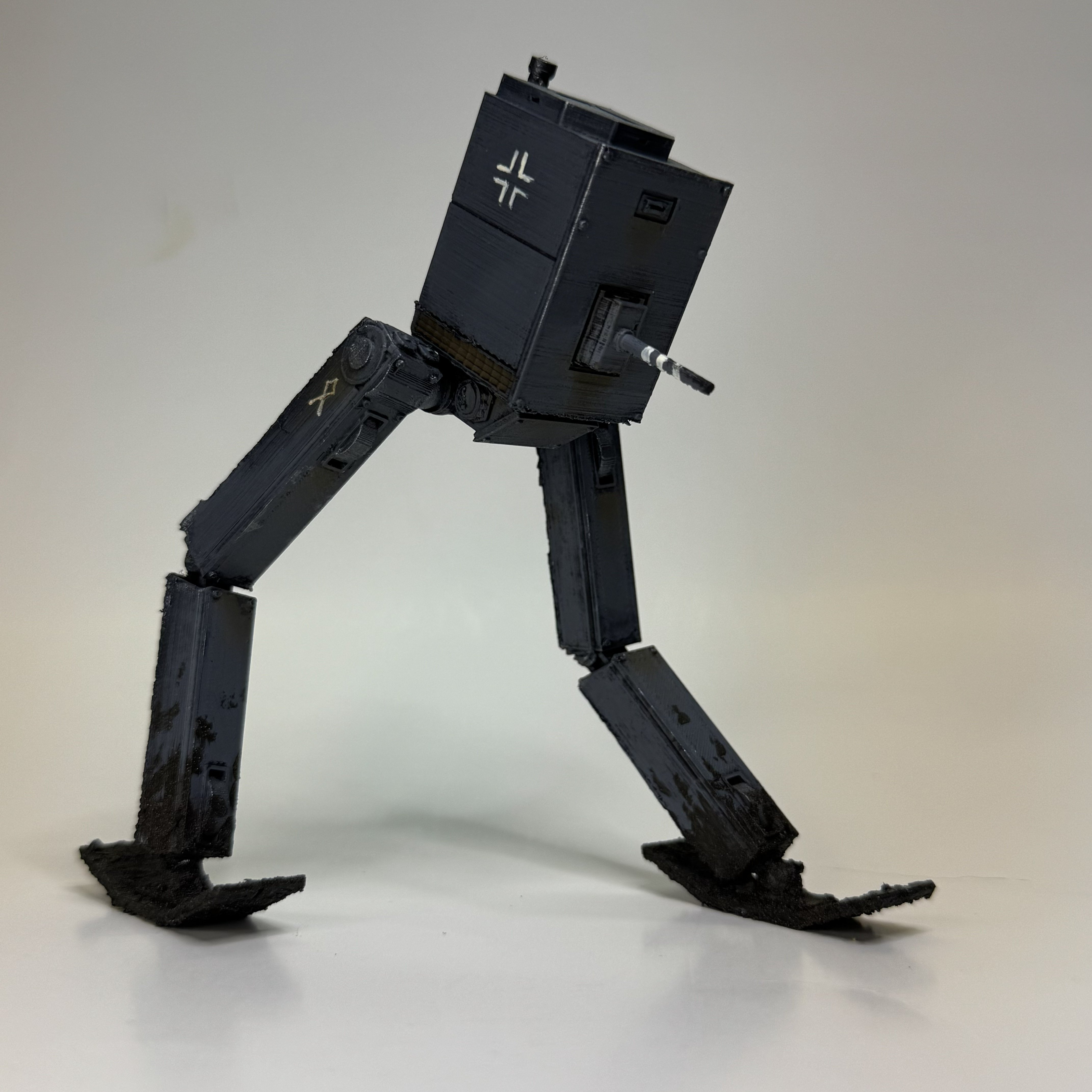
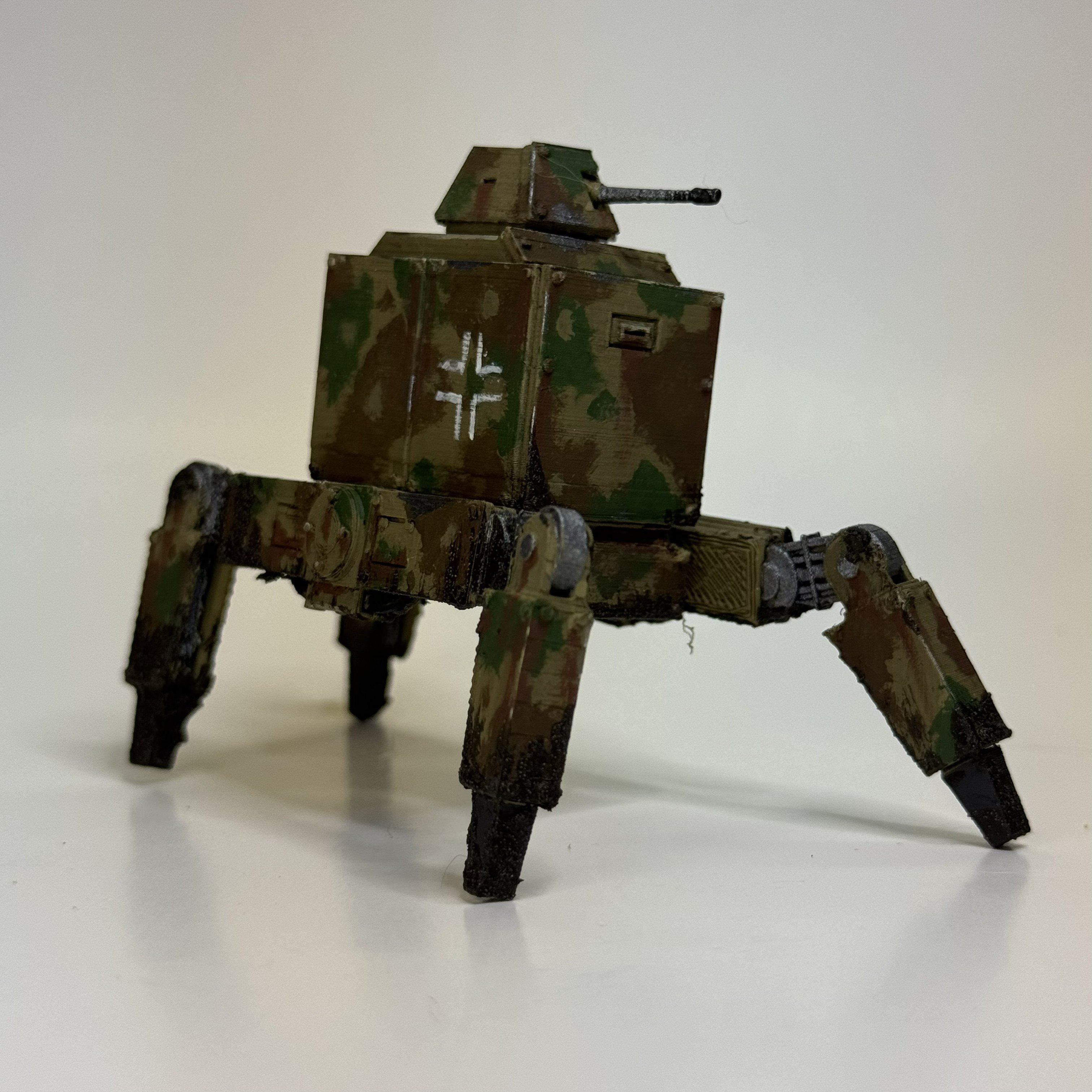
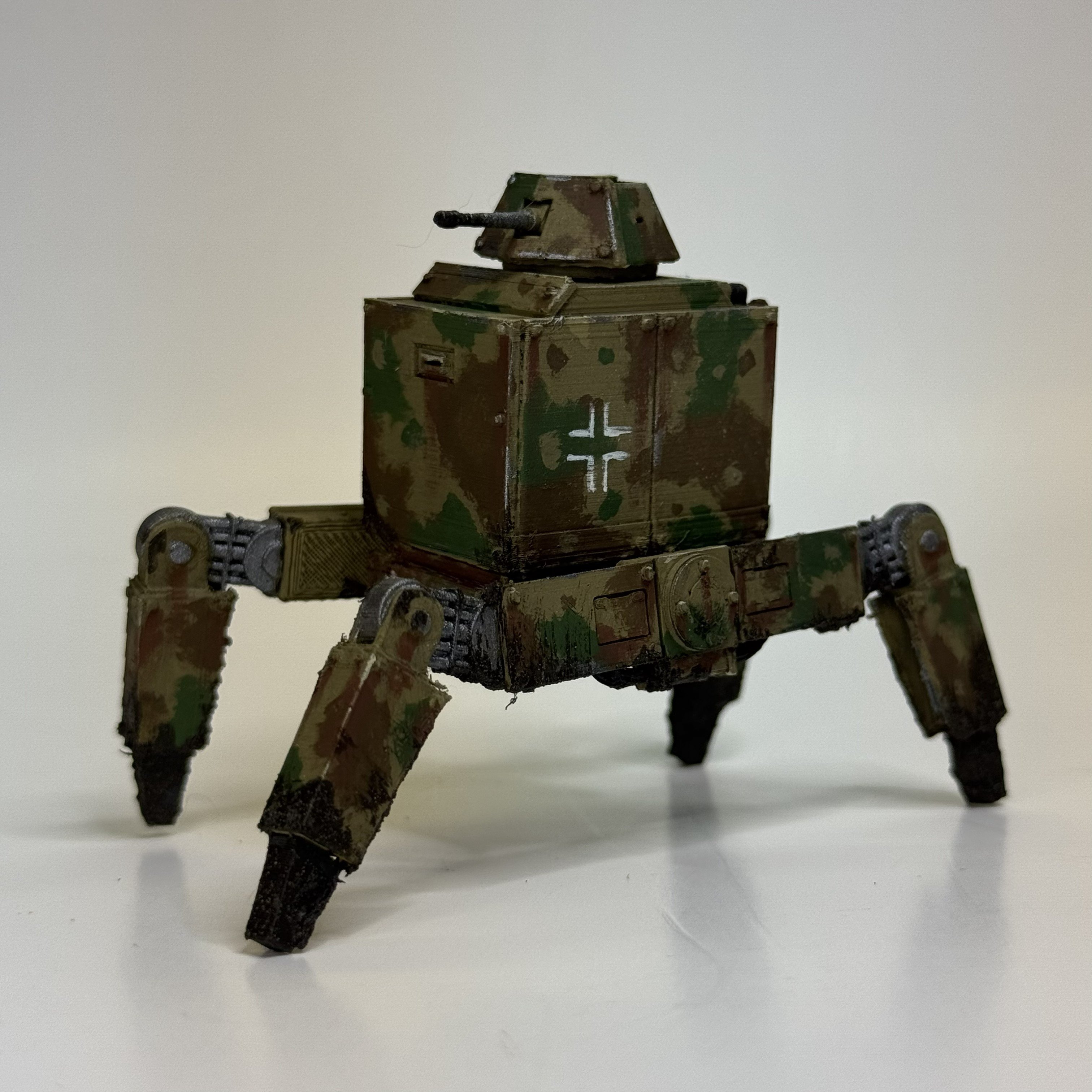
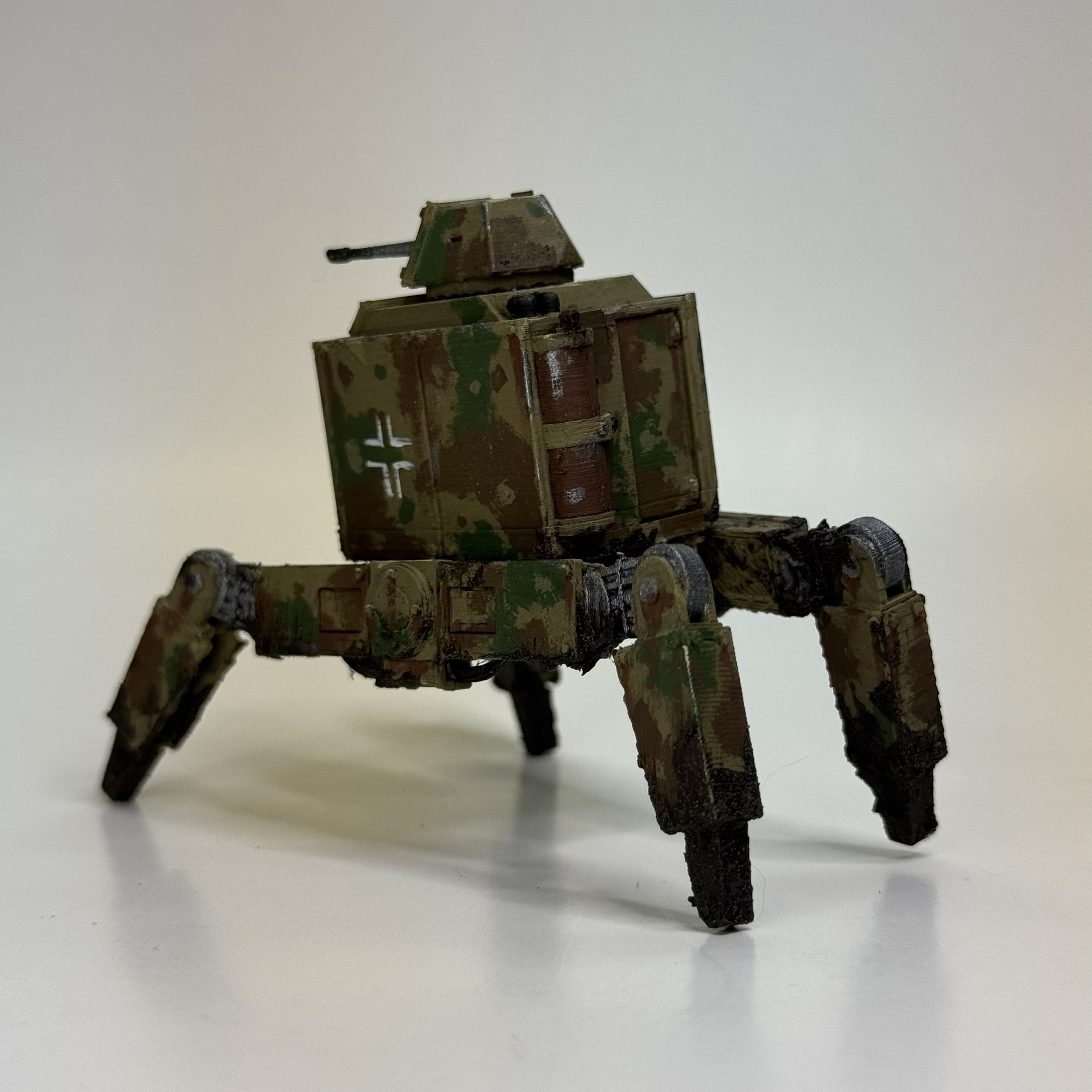
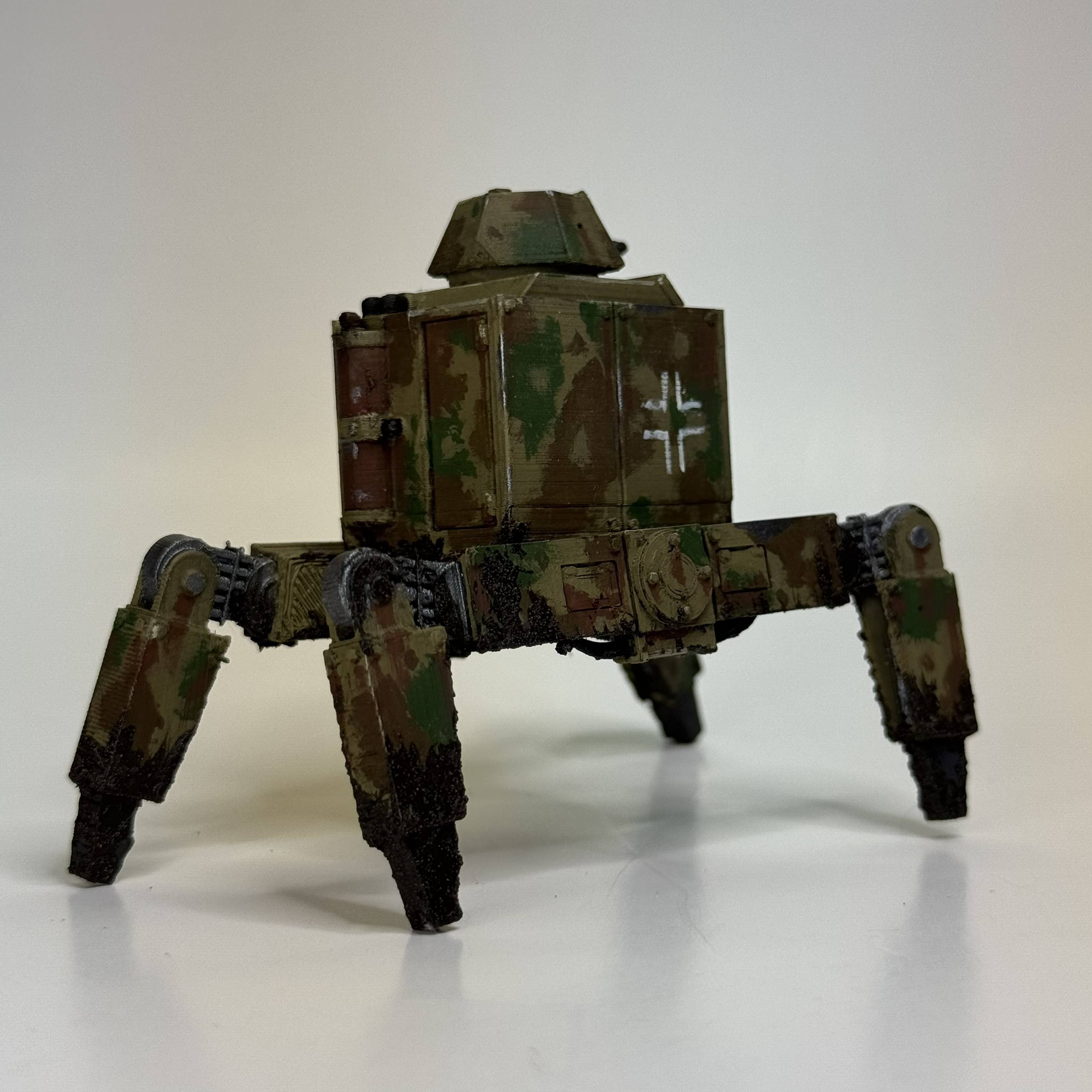
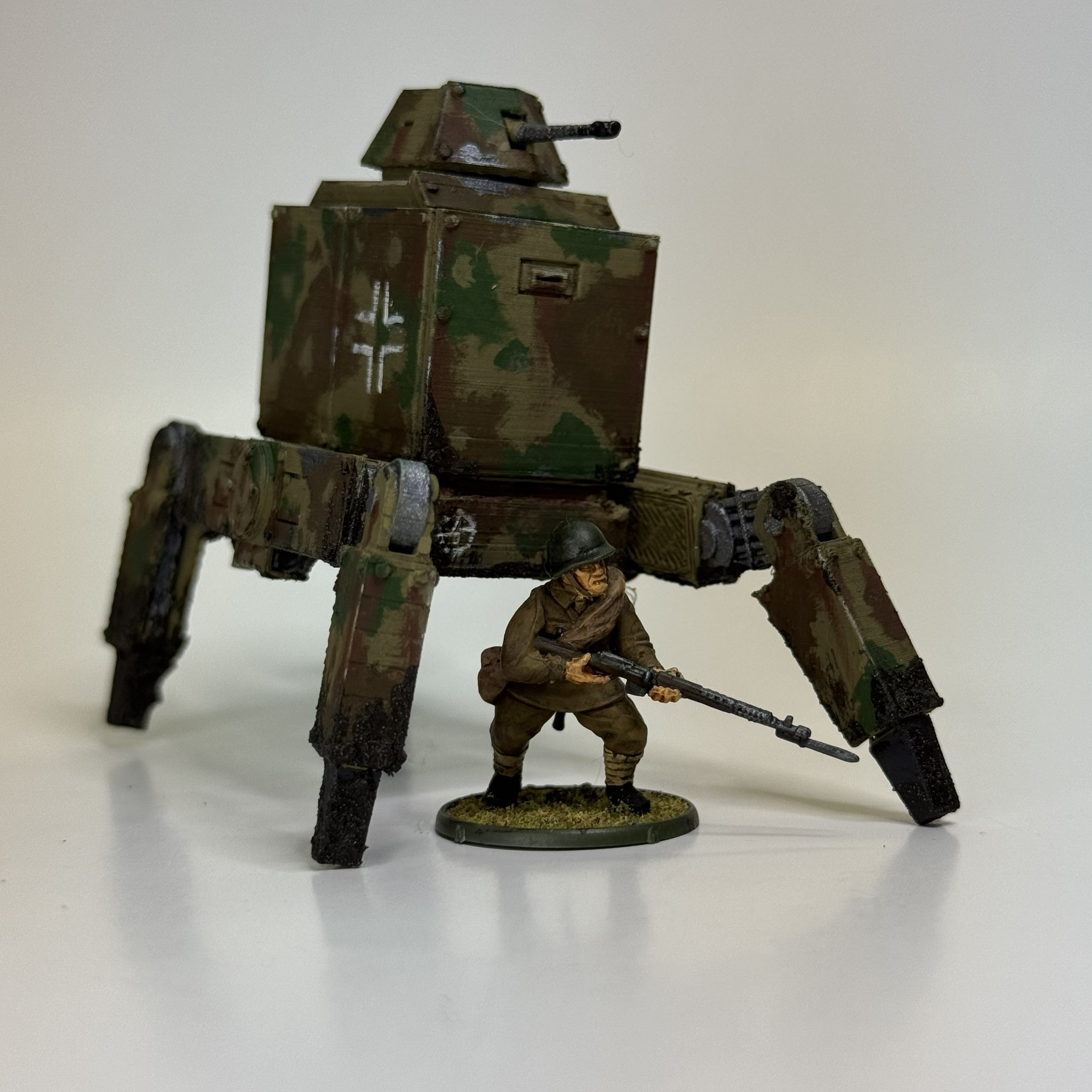
The resulting mech was designated Gehendepanzer II Jägerspinne, meaning ‘hunting spider.’ Its main innovation (in addition to being quadrupedal) was its turret, mounting a 20 mm Flak 30 and being crewed by a single gunner. This, combined with the legs which were segmented into multiple pieces for suspension, allowed the mech to fire without intense recoil, even being able to fire on the move. The cockpit was armored the same as its predecessor with the front, sides, and turret face armored to 50 mm and the rest armored to 20 mm.
Five-hundred Jägerspinnen were produced between November 1940 and the cessation of production in December 1942. The mechs were held in reserve until the launch of Operation Barbarossa; three-hundred sixty were available for the initial invasion and were concentrated in Heeresgruppe Süd and Mitte.
The Jägerspinnen were quickly proved to be very effective against the older and lighter Soviet tanks and armored cars; the PzGr.40 anti-tank rounds could penetrate and destroy T-26 and BT type vehicles at long range (500 m) and could dispatch T-28s at closer ranges (100 m), while their armor was tough for the Soviet 45 mm guns to penetrate when angled properly and impervious to 20 mm fire from guns like the TNSh. During the first few summer months, these mechs were deployed to great effect. By this point, more broke down than were destroyed by enemy fire; forty-two were lost to Soviet tanks and seventeen to indirect artillery fire compared to the ninety which required repair due to technical failings. Often, units of Jägerspinnen became disconnected from their supply groups and (rather than be carried on trailers) were forced to walk their way to objectives, causing much more mechanical wear than was anticipated.
Where these mechs struggled is where they encountered T-34 and KV tanks; their 20 mm Flak cannons could do nothing but immobilize these heavier types, and their armor was inadequate to protect against high-velocity 76 mm rounds. As the Soviets phased out — or lost — their older tanks which the Jägerspinne was capable of defeating, Jägerspinnen became unviable in a tank-on-tank (rather, mech-on-tank) role and were relegated to reconnaissance missions until those already extant could be upgraded to ausf. B standard and upgunned to the 28mm Panzerbüsche 41 in early 1942. The roughly two-hundred fifty existing mechs were upgraded to ausf. B and one-hundred more were produced with the new anti-tank guns before production terminated in November.
The chassis of the Jägerspinne was used for multiple weapons tests at Dresdenwerke. A testing batch of twenty-four were equipped with a redesigned turret armed with three Nebelwerfer 41 tubes and designated Gehendepanzer II ausf B mit Nebelwerfer. These were deployed at Stalingrad in December 1942 and those which survived (only seven) were withdrawn in May 1943 to be scrapped, having performed unsatisfactorily. Jägerspinnen ausf. A and B were recorded as being in service until the end of the war, most being transferred to Italy and the West after the introduction of the Gehendepanzer III and IV, both of which were much more suited to the heavy armor characteristic of the Ostfront.
My first mech up to standard with the rest of my models. Any combination of leg pieces can work; there are four leg poses available in addition to a straight 90-degree. The hip piece does not need to be mirrored, but the legs do. Use supports and be careful removing them on the legs. The turret can (as of now) only be armed with the FlaK 30 but a Nebelwerfer turret will likely be added. Happy hunting!
Parts to complete mech:
1x Cockpit
1x Codpiece
2x Hip
2x Ball Socket
4x Leg (any type)
1x Turret
1x Autocannon
The first few Gehendefahrzeuge which entered the Wehrmacht’s arsenal quickly proved themselves to be valuable tools of warfare. They were fast, agile, and could reach places where tanks’ guns couldn’t. However, they still faced a problem; the stability of a two-legged platform would always be rather shaky, hindering the mounting of more powerful armaments than light anti-tank guns. The programme’s intent from the start was to produce vehicles on the same level as contemporary tanks, but this would be impossible on a bipedal chassis. As such, Dresdenwerke began development on a quadrupedal mech in February 1939, before the Gehendepanzer I even completed its first prototype.
The resulting mech was designated Gehendepanzer II Jägerspinne, meaning ‘hunting spider.’ Its main innovation (in addition to being quadrupedal) was its turret, mounting a 20 mm Flak 30 and being crewed by a single gunner. This, combined with the legs which were segmented into multiple pieces for suspension, allowed the mech to fire without intense recoil, even being able to fire on the move. The cockpit was armored the same as its predecessor with the front, sides, and turret face armored to 50 mm and the rest armored to 20 mm.
Five-hundred Jägerspinnen were produced between November 1940 and the cessation of production in December 1942. The mechs were held in reserve until the launch of Operation Barbarossa; three-hundred sixty were available for the initial invasion and were concentrated in Heeresgruppe Süd and Mitte.
The Jägerspinnen were quickly proved to be very effective against the older and lighter Soviet tanks and armored cars; the PzGr.40 anti-tank rounds could penetrate and destroy T-26 and BT type vehicles at long range (500 m) and could dispatch T-28s at closer ranges (100 m), while their armor was tough for the Soviet 45 mm guns to penetrate when angled properly and impervious to 20 mm fire from guns like the TNSh. During the first few summer months, these mechs were deployed to great effect. By this point, more broke down than were destroyed by enemy fire; forty-two were lost to Soviet tanks and seventeen to indirect artillery fire compared to the ninety which required repair due to technical failings. Often, units of Jägerspinnen became disconnected from their supply groups and (rather than be carried on trailers) were forced to walk their way to objectives, causing much more mechanical wear than was anticipated.
Where these mechs struggled is where they encountered T-34 and KV tanks; their 20 mm Flak cannons could do nothing but immobilize these heavier types, and their armor was inadequate to protect against high-velocity 76 mm rounds. As the Soviets phased out — or lost — their older tanks which the Jägerspinne was capable of defeating, Jägerspinnen became unviable in a tank-on-tank (rather, mech-on-tank) role and were relegated to reconnaissance missions until those already extant could be upgraded to ausf. B standard and upgunned to the 28mm Panzerbüsche 41 in early 1942. The roughly two-hundred fifty existing mechs were upgraded to ausf. B and one-hundred more were produced with the new anti-tank guns before production terminated in November.
The chassis of the Jägerspinne was used for multiple weapons tests at Dresdenwerke. A testing batch of twenty-four were equipped with a redesigned turret armed with three Nebelwerfer 41 tubes and designated Gehendepanzer II ausf B mit Nebelwerfer. These were deployed at Stalingrad in December 1942 and those which survived (only seven) were withdrawn in May 1943 to be scrapped, having performed unsatisfactorily. Jägerspinnen ausf. A and B were recorded as being in service until the end of the war, most being transferred to Italy and the West after the introduction of the Gehendepanzer III and IV, both of which were much more suited to the heavy armor characteristic of the Ostfront.
My first mech up to standard with the rest of my models. Any combination of leg pieces can work; there are four leg poses available in addition to a straight 90-degree. The hip piece does not need to be mirrored, but the legs do. Use supports and be careful removing them on the legs. The turret can (as of now) only be armed with the FlaK 30 but a Nebelwerfer turret will likely be added. Happy hunting!
Parts to complete mech:
1x Cockpit
1x Codpiece
2x Hip
2x Ball Socket
4x Leg (any type)
1x Turret
1x Autocannon
No one's reviewed this product yet. Let people know if you enjoyed this model!
| Filename | Size | Last updated |
|---|---|---|
| Gehendepanzer II 'Jagerspinne'.zip | 1.0 MiB | 2026-04-26 |