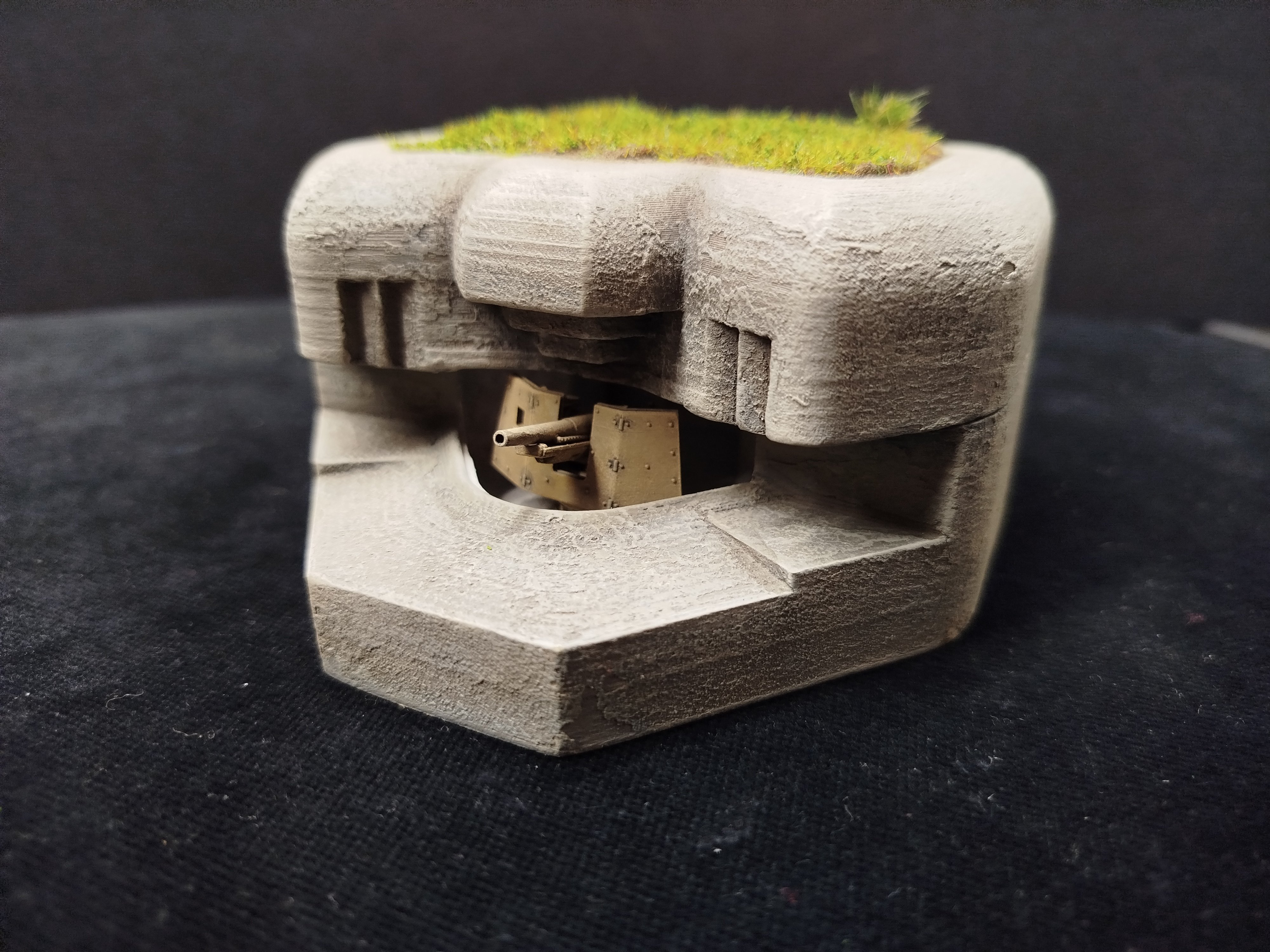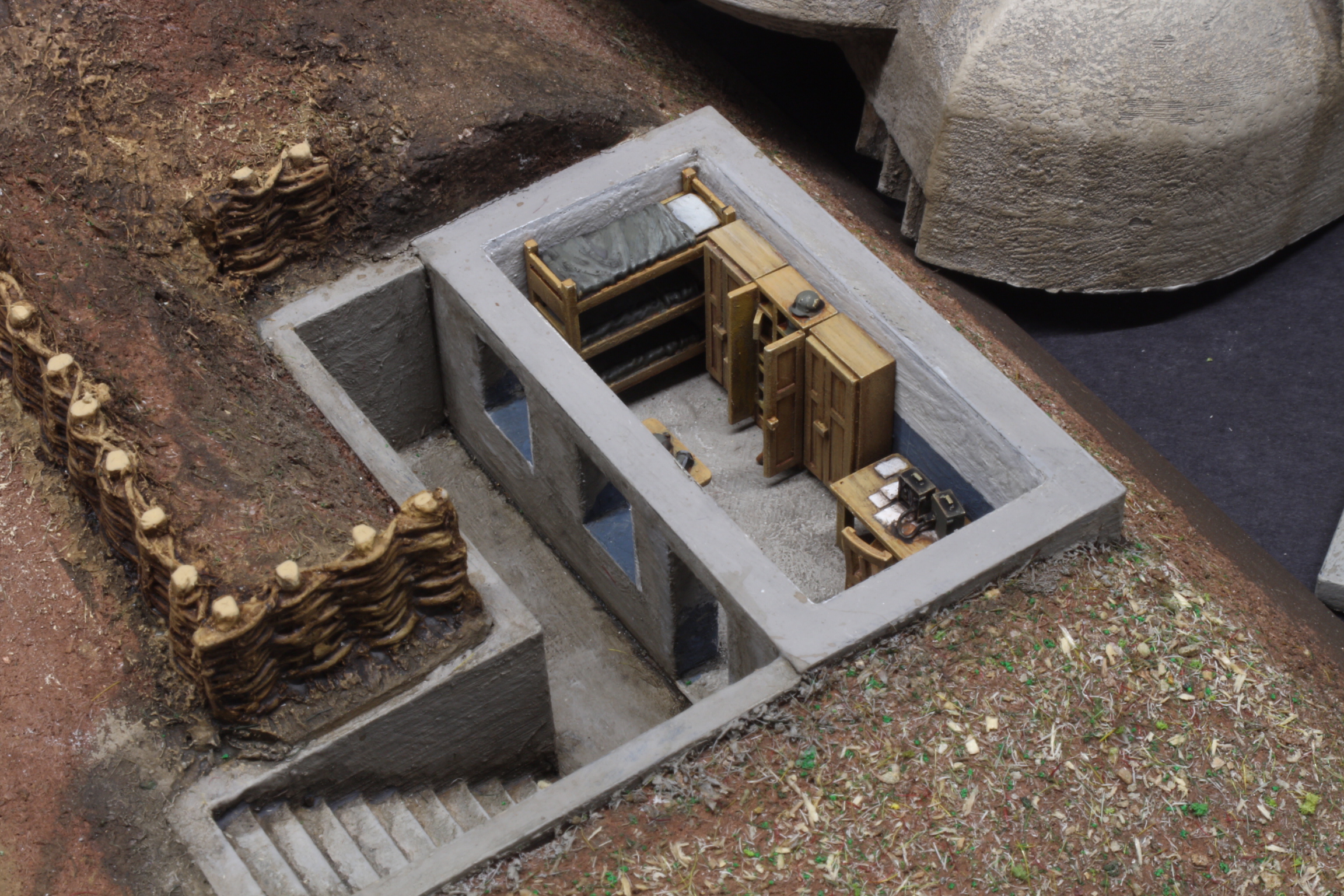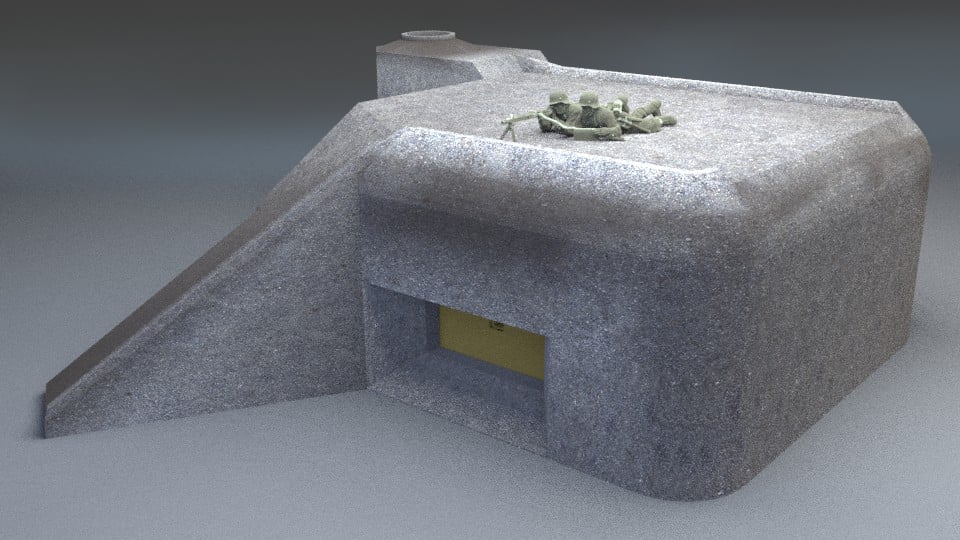
WW2 D-Day Atlantic Wall German Bunker - R661 casualty collection (field hospital) shelter
- Description
- Reviews
- Files
Regelbau H661 Unterstand für Verwundetensammelstelle
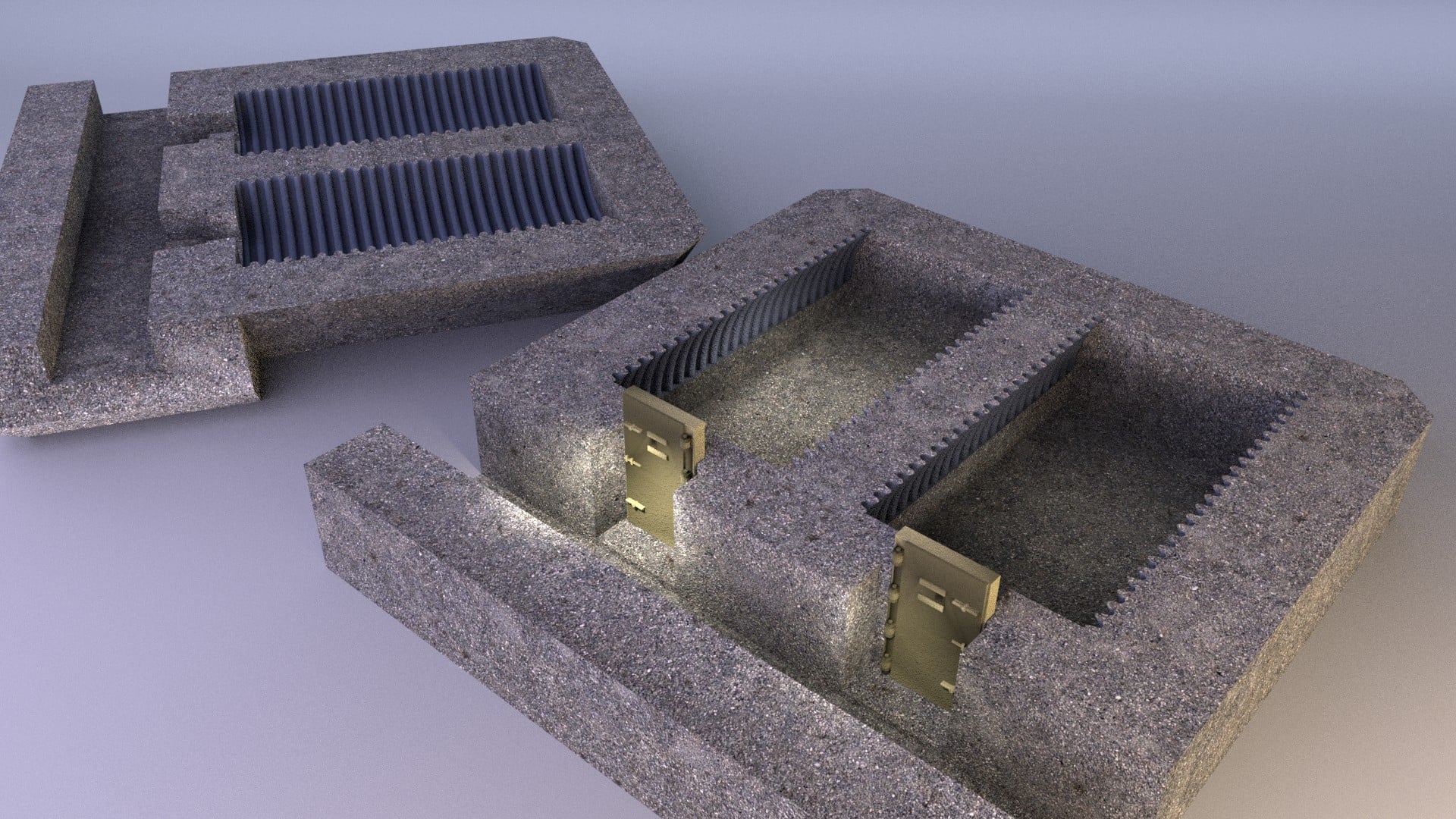
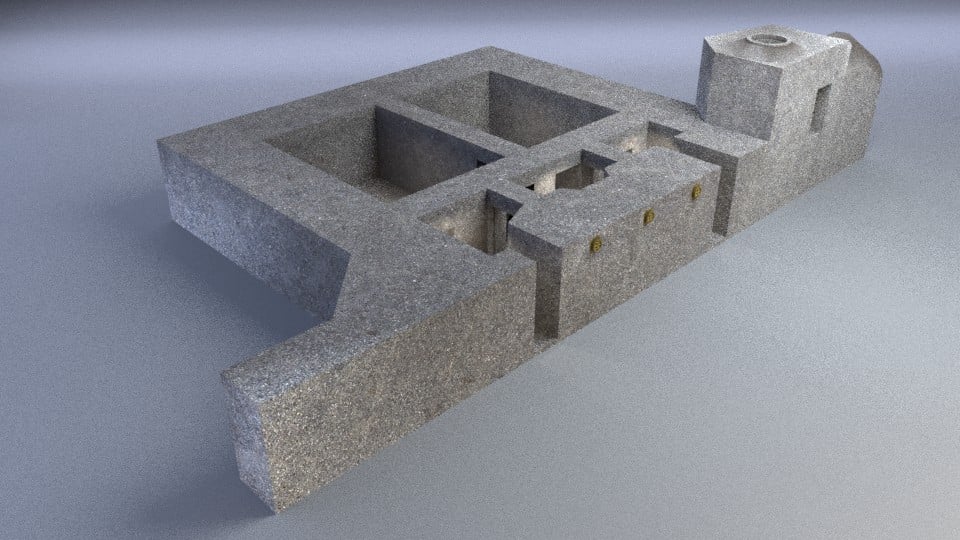
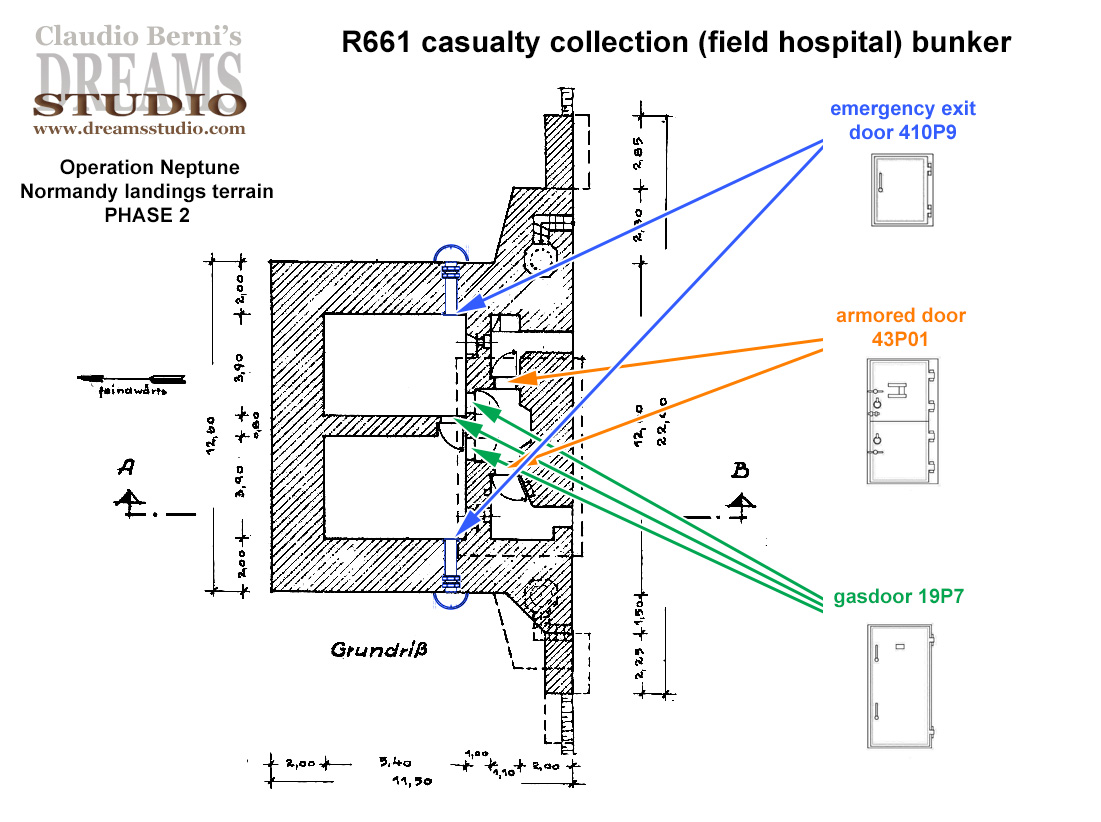
The R661 was designed to normally accommodate two infantry squads but also serve as a casualty collection point if needed. Accordingly one of the entrances was modified to allow the wounded to be brought in on a stretcher. This bunker was meant to be built in bases and pockets of resistance where specialized medical shelters could not be built. It was used as a normal double group shelter and was only to be converted into a medical shelter during hostilities. Due to the changed entrance area, the protection of the entrance door was no longer fully guaranteed. In view of the task of the system, the installation of a well was particularly important. Therefore, the groundwater conditions had to be taken into account in particular when choosing the location.
Each of these bunker featured two emergency exits and one (rarely two) "Tobruk" Ringstände, which may be capped by the turret of some obsolete tank, like the FT17.
Check out the rest of my historically accurate bunkers as were found on the Normandy beaches!
Built in the "St" standard these bunkers had a minimum wall and roof thickness of 2 meters of reinforced concrete and were therefore classified as "Bombproof" (Ständiger Ausbau). Despite being extensively bombed in the days prior to the invasion they suffered very little damage and proved to be indeed very resistant.
Check out the rest of my historically accurate bunkers as were found on the Normandy beaches!
Files available ready to print for both 15mm (1:100) and 28mm (1:56). For a great concrete look just brush it over with PVA and dust with fine sand!
Designed to print easily on any machine in your favorite scale from 6mm to 1:32
When required the models are supplied in different versions optimized for smaller (1:100 or less) and larger (1:50 or more) scales.
The 1:50 scale is suitable for very large 28mm figures.
For printing in 1:56 scale the 1:50 version down to 89.2857% (or Multiply by 0.8929)
For printing in 10mm: scale the 1:100 version down to 66% (or Multiply by 0.6666)
For printing in 6mm: scale the 1:100 version down to 40% (or Multiply by 0.4)
For printing in 1:72 (20mm): scale the 1:50 version down to 69.4444% (or Multiply by 0.6944)
For printing in 1:35: scale the1:50 version up to 142.8571% (or Multiply by 1.4286)
For printing in 1:32 (54mm): scale the 1:50 version up to 156.25% (or Multiply by 1.5625)
All my bunkers are specifically designed for table top gaming, static models and diorama. As such some of them may not include what was underground which in some cases is the largest part of the building, but would be invisible in normal circumstances. All bunkers include however the historically correct internal arrangement. All models have been test printed at both 15mm (1:100) and 28mm (1:56). Whenever possible the bunkers are designed with a removable top and generally include one or more sprue of additional fine details which are not really suitable for FDM printing and should only be printed in resin. When required these details are also supplied in different versions optimized for smaller and larger scales. Please note that while I put the utmost care in all work I do and I did test print all models in advance, it is always possible that there may be some missing file or some unresolved issue that escaped me. If you do find any problem please report it to me ASAP so I can fix it!
For a great concrete look just paint over the FDM print with PVA and lightly dust with very fine sand!
Try to avoid a uniform cover, leave some of the print lines to show and for extra realism try to add a sprinkle of different sized sand
The Regelbau (German for "standard design") were a series of standardised bunker designs built with walls up to 3.5 meters thick and forced ventilation.
“Wn” is the German abbreviation of Wiederstandnest, which literally means “nest of resistance”. In military English terms, it is a called a "strongpoint". Some of these strongpoints were particularly strengthened as they were expected to play a key role and usually consisted of several linked Wns: they were known as Stützpunkten (support points), abbreviated as “Stp”. For example, The strongpoint at the Pointe du Hoc, was known as Wn75 or Stützpunkt Bayeux 075. All these were organized in Stützpunktgruppe or Strongpoint Groups which in turn belonged to a Küstenverteidigungsabschnitt and Verteidigungsbereich or Defence Area.
Check out the excellent reference page at
https://www.dday-overlord.com/en/d-day/atlantic-wall/strongpoints
for a great list of all the German strongpoints on the invasion beaches with details of what bunkers were included in it!
| Filename | Size | Last updated |
|---|---|---|
| 15mm_escape.door.01.stl | 3.0 MiB | 2025-10-02 |
| 15mm_escape.door.02.stl | 3.0 MiB | 2025-10-02 |
| 15mm_escape.join.stl | 339.4 KiB | 2025-10-02 |
| 15mm_escape.shaft.stl | 275.4 KiB | 2025-10-02 |
| 15mm-periscope+chimney.stl | 4.6 MiB | 2025-10-02 |
| 19P7_gasdoor.stl | 92.2 KiB | 2025-10-02 |
| 43P01-armored door.stl | 194.0 KiB | 2025-10-02 |
| R661.BASE.01.stl | 27.8 KiB | 2025-06-30 |
| R661.BASE.02.stl | 26.9 KiB | 2025-06-30 |
| R661.BASE.tobruk.stl | 12.5 KiB | 2025-06-30 |
| R661.TOP.01.stl | 8.5 KiB | 2025-06-30 |
| R661.TOP.02.stl | 6.2 KiB | 2025-06-30 |
| R661.TOP.tobruk.stl | 49.7 KiB | 2025-06-30 |
| ventilation grills.stl | 145.4 KiB | 2025-10-02 |

More wonderful creations from DREAMS STUDIO - see more